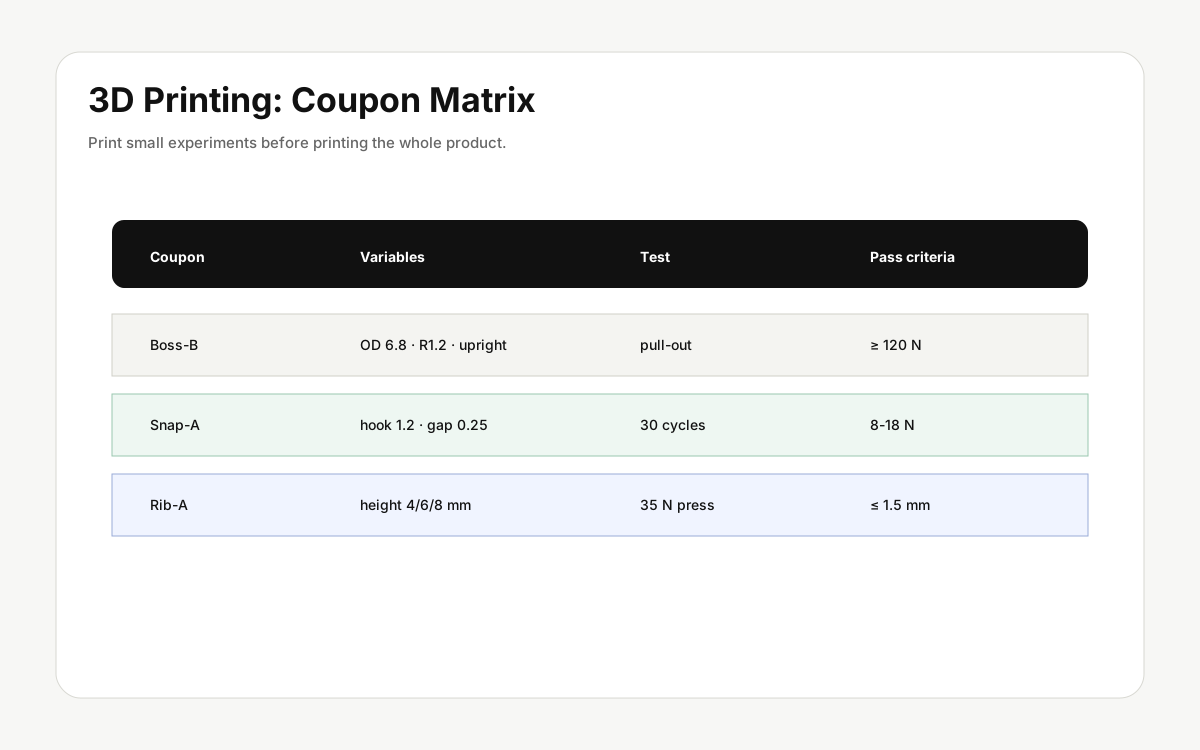
3D printing makes an idea tangible quickly, but layer-by-layer fabrication changes strength, surface quality, tolerances, and fastening behavior. A print is useful only when it answers a product question.
Checklist
- Which requirement or decision should this print support?
- Does build orientation match the load path being tested?
- Do wall thickness, shell count, infill, and raster direction match the risk area?
- How will fasteners, inserts, clips, adhesives, or bolts work?
- What heat, humidity, UV, chemical, impact, or fatigue conditions matter?
- Which surfaces need support removal, sanding, coating, or paint?
- Do you need small coupons for bosses, hinges, snap-fits, and ribs?
- What printer, material, orientation, infill, and test data will be recorded?
The first print is not the final product. It is a physical experiment tied to requirements and evidence.