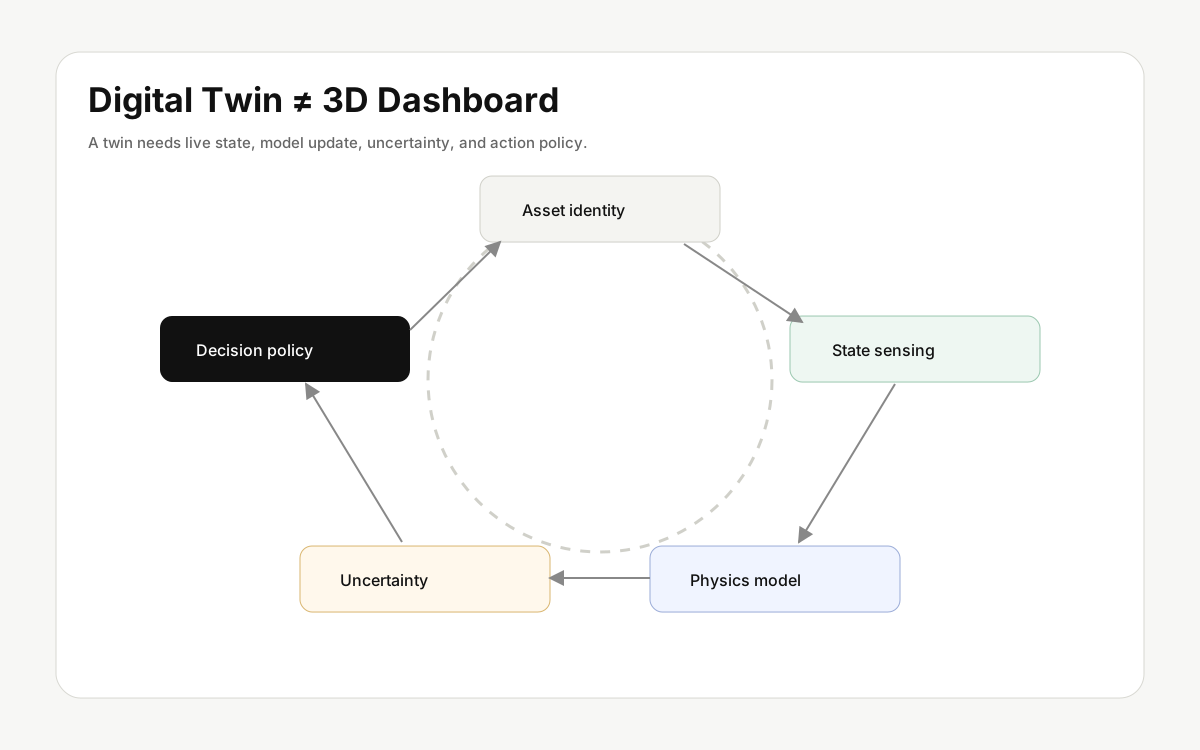
Digital twin, CAE, and simulation all use virtual models, but they differ in data connection and time horizon. Simulation calculates behavior under defined conditions. CAE turns that calculation into an engineering workflow around CAD, mesh, materials, boundary conditions, solvers, reports, and design changes.
A digital twin is stronger than a 3D dashboard. It connects a real product, machine, or process to data streams, updates model state over time, and supports monitoring, prediction, or operational decisions. ISO 23247 manufacturing research and predictive-maintenance digital-twin work both emphasize real-time data, uncertainty, and decision loops.
Early product development often needs CAE screening before a full digital twin is possible. RHXY Sim focuses on that early decision layer: CAD, assumptions, load cases, and physical risk review before live product data exists.