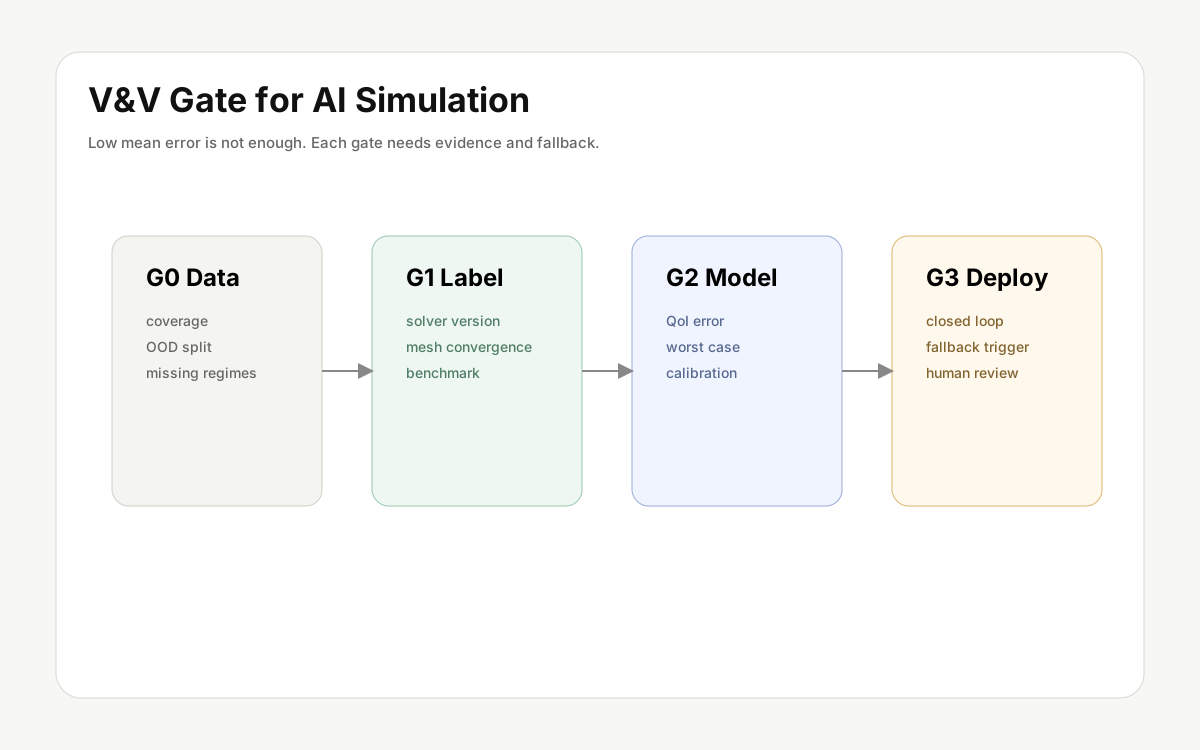
AI CAE needs more than speed. A surrogate with low average error can still fail outside its geometry class, boundary-condition range, or operating region.
Verification and validation are different
Verification checks whether the implementation is correct. Validation checks whether the model represents the real system well enough for its intended use. AI surrogates also need data validation and deployment validation.
Stand-alone accuracy is not enough
A 2026 paper on physics-informed surrogate component models shows that good stand-alone accuracy does not guarantee accurate behavior after insertion into a coupled simulator. Coupling sensitivity, stressed operating regions, and dynamic error amplification matter.
Evidence package
- Intended use and decision criticality.
- Domain of applicability.
- Reference solver, experiment, or benchmark baseline.
- QoI error, worst-case error, spatial localization, not only mean error.
- Uncertainty and out-of-distribution indicators.
- Fallback policy to full solver, experiment, or human review.