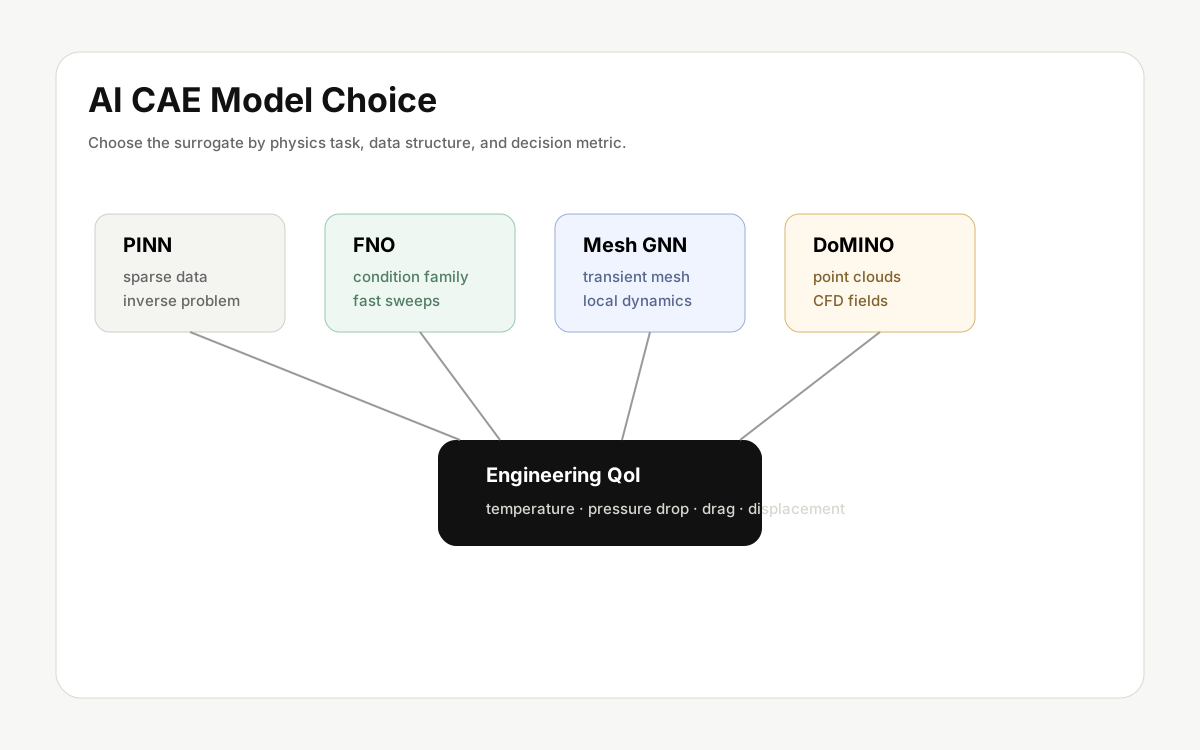
AI CAE를 “PINN으로 PDE를 푼다” 정도로 이해하면 현재 흐름을 놓치기 쉽습니다. 2026년 기준 AI 기반 물리해석은 PINN, neural operator, graph neural network, point-cloud operator, diffusion-based super-resolution, reduced-order model이 문제 목적에 따라 섞이는 방향으로 가고 있습니다.
핵심은 반복 평가입니다. 고전 solver는 특정 조건 하나를 풀고, AI surrogate는 조건의 family를 학습해 여러 후보를 빠르게 비교하려고 합니다. 그래서 AI CAE의 가치는 “한 번의 정답”보다 design exploration, optimization loop, digital twin, inverse problem에서 커집니다.
FNO: 한 개 PDE가 아니라 solution operator를 학습하기
Fourier Neural Operator(FNO)는 neural operator 흐름을 대중화한 대표 연구입니다. PDE의 각 instance를 매번 새로 푸는 것이 아니라, input function에서 solution function으로 가는 operator를 학습합니다. 논문은 Burgers, Darcy, Navier-Stokes 문제에서 zero-shot super-resolution과 기존 PDE solver 대비 큰 속도 향상을 보고했습니다.
이 접근은 CAE에서 중요한 의미를 갖습니다. 제품 설계에서는 조건 하나만 보지 않습니다. geometry, boundary condition, material property, operating condition을 바꿔가며 수십-수천 후보를 비교합니다. Neural operator는 이 반복 평가 구간에서 강력합니다.
MeshGraphNets: mesh 자체를 graph로 보기
MeshGraphNets는 mesh-based simulation을 graph neural network로 학습하는 방향을 보여줬습니다. mesh는 CAE의 자연스러운 표현입니다. node, edge, element 관계가 있고, 하중과 상태가 시간에 따라 전달됩니다. DeepMind의 MeshGraphNets 논문은 aerodynamics, structural mechanics, cloth 등 여러 물리 시스템에서 simulator보다 1-2 orders of magnitude 빠른 예측을 보고했습니다.
다만 이것이 모든 CAE를 대체한다는 뜻은 아닙니다. 학습 데이터의 domain, mesh quality, time integration stability, out-of-distribution 조건에서의 신뢰성이 핵심입니다.
DoMINO와 industrial CFD surrogate
NVIDIA Modulus/PhysicsNeMo 계열의 DoMINO는 대규모 engineering simulation surrogate의 한 방향을 제시합니다. DoMINO 논문은 automotive aerodynamics use case에서 DrivAerML dataset을 사용하고, local geometric information을 가진 point cloud 기반 모델로 surface/volume field를 예측합니다.
DoMINO가 의미 있는 이유는 “AI로 CFD가 빨라졌다”는 말보다 구체적입니다. 기존 ML surrogate가 mesh downsampling에 의존해 정확도와 일반화 문제가 생길 수 있다는 문제를 겨냥하고, engineering-specific metric으로 성능을 평가합니다. NVIDIA PhysicsNeMo 문서도 CFD, thermal analysis, weather/climate 등 여러 reference pipeline을 제공하고, neural operator, GNN, diffusion model, PINN을 모두 모델 패밀리로 다룹니다.
AI CAE 모델은 목적별로 골라야 합니다
- PINN: sparse data, inverse problem, equation residual을 직접 쓰고 싶을 때 유용하지만, 복잡한 산업-scale geometry와 turbulent flow에서는 학습 난도가 큽니다.
- FNO / Neural Operator: 같은 물리 문제 family에서 조건을 바꿔 반복 평가할 때 강합니다.
- GNN / MeshGraphNet: mesh topology와 local interaction을 살려 transient dynamics를 학습할 때 유리합니다.
- Point-cloud operator / DoMINO: 복잡한 geometry의 surface/volume field prediction에 적합한 방향입니다.
- ROM + Neural Operator: digital twin처럼 real-time response가 필요할 때 여전히 중요합니다.
| 문제 유형 | 추천 접근 | 필요 데이터 | 주의할 리스크 |
|---|---|---|---|
| 자동차 외부 공력 field preview | Point-cloud operator / DoMINO 계열 | 표면/볼륨 field, geometry tag, DrivAer 계열 variant | body type, yaw, ground clearance OOD에서 성능 저하. |
| 열전달 설계 후보 ranking | FNO / DeepONet / ROM hybrid | boundary condition family, heat source, temperature field, pressure drop | 새로운 냉각 구조나 phase change에는 외삽 위험. |
| 시간 의존 구조/유체 dynamics | MeshGraphNet / graph simulator | mesh sequence, node/edge features, time-step state | long rollout에서 error accumulation. |
| 희소 센서 기반 inverse problem | PINN / Bayesian surrogate | sensor data, PDE residual, prior range | loss balancing과 identifiability 문제. |
| 운영 중 digital twin inference | ROM + neural correction + uncertainty | 실험/운영 센서, reduced state, calibration log | 센서 drift, operating regime shift. |
2026년 연구가 말하는 현실적인 결론
2026년 SMR helical coil steam generator surrogate 연구는 L-DeepONet과 FNO가 서로 다른 장점을 보였다고 보고합니다. multi-scale L-DeepONet은 순간적인 vortex dynamics를 더 잘 포착했고, FNO 계열은 time-averaged mean flow와 pressure drop 추정에서 실용적이었다는 식입니다. 이 결론은 중요합니다. AI CAE 모델은 “하나의 정답”이 아니라 “목표 지표에 맞는 선택”입니다.
Worked example: 히트싱크 surrogate를 만든다면
소형 전자기기 히트싱크 설계를 빠르게 비교하는 surrogate를 만든다고 가정해보겠습니다. 모델 목표는 full CFD를 대체하는 것이 아니라, 200개 후보 중 상위 20개를 고르는 screening입니다.
| 데이터 필드 | 예시 | 왜 필요한가 |
|---|---|---|
| Geometry parameters | fin height 8-18 mm, fin pitch 1.2-3.0 mm, base thickness 2-5 mm | 모델이 어떤 설계 공간에서만 유효한지 정의합니다. |
| Boundary condition | heat source 3 W / 5 W / 8 W, inlet velocity 0.5-2.0 m/s | 열원과 유동 조건이 temperature field를 지배합니다. |
| Solver provenance | steady RANS, turbulence model, mesh y+, residual 1e-5 | 학습 label의 물리 가정과 수치 품질을 추적합니다. |
| Outputs | max temperature, pressure drop, surface temperature field | field error와 설계 QoI를 모두 평가합니다. |
| Split | fin pitch 2.6-3.0 mm와 8 W 조건을 OOD test로 분리 | 무작위 split이 아니라 설계 외삽 성능을 봅니다. |
이 surrogate의 통과 기준은 평균 field error만으로 정하면 안 됩니다. 상위 20개 후보 ranking overlap 80% 이상, max temperature error 2도 이하, pressure drop error 8% 이하, OOD 조건에서는 confidence flag가 켜지는지까지 봐야 합니다. 이런 기준이 있어야 AI CAE가 제품 설계에서 실제로 쓸 수 있는 도구가 됩니다.
제품 개발에서 어디에 먼저 쓰일까
AI CAE가 바로 certification solver를 대체하기보다 먼저 들어갈 곳은 명확합니다. 초기 설계 후보 screening, geometry variation ranking, thermal/flow field quick preview, digital twin near-real-time inference, optimization loop acceleration입니다. 여기서는 완벽한 정답보다 빠른 비교와 위험 후보 제거가 더 중요합니다.
RHXY Sim이 지향해야 할 방향도 같습니다. AI surrogate는 solver를 가리는 검은 상자가 아니라, 조건과 신뢰 범위가 표시된 decision layer가 되어야 합니다. 사용자는 “이 결과가 왜 빠른지”보다 “어떤 조건에서는 믿을 수 있고, 어떤 조건에서는 full solver나 실험으로 돌아가야 하는지”를 알아야 합니다.
참고 자료
- Fourier Neural Operator for Parametric Partial Differential Equations
- Neural Operator: Learning Maps Between Function Spaces
- Learning Mesh-Based Simulation with Graph Networks
- DoMINO: A Decomposable Multi-scale Iterative Neural Operator
- NVIDIA PhysicsNeMo
- PhysicsNeMo DoMINO Example
- Neural Operator-Based Surrogate Model for CFD in SMR Thermal-Hydraulics